Heat & chemistry
Identify peak conditions, dwell times, concentrations and repeated cycles.


Durability
An item can move through years of handling, processing and service. Its physical identity needs to remain readable at the checkpoints that matter.
The complete construction
The identifier, attachment and host material operate together. A successful chip read in one test does not establish that every tagged item will perform in the same conditions.
Define the temperatures, chemicals, mechanical loads and duration of exposure. Then evaluate the complete construction and the reader at the actual checkpoint.
Explore the technical overviewCold storage
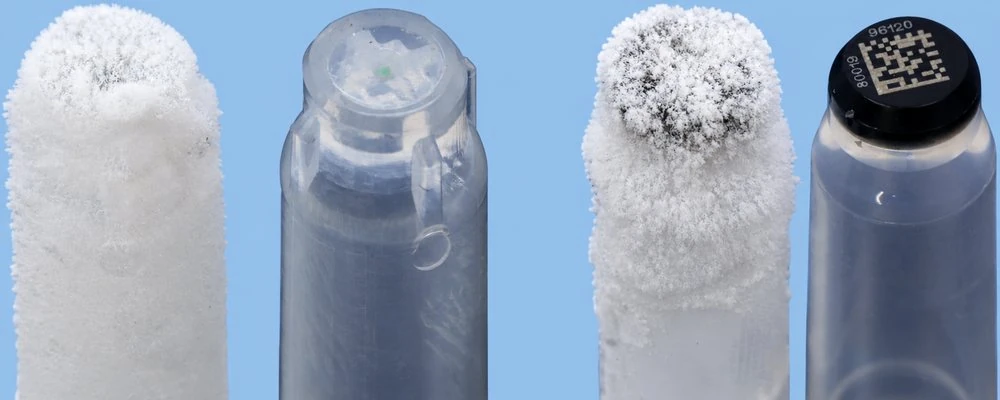
Frost and ice can obscure a printed identifier. Published biorepository research studied electronic p-Chip identification of tubes in cold-storage workflows.
Your evaluation should include frost coverage, handling, thermal cycling, read position and the performance required by your process.
Process exposure
A temperature alone is not a process specification. Capture the full combination of exposures and reading requirements.
Identify peak conditions, dwell times, concentrations and repeated cycles.
Evaluate the bond, embedded construction and the path for activating light.
Measure the required read rate before, during or after the relevant process steps.
Service life
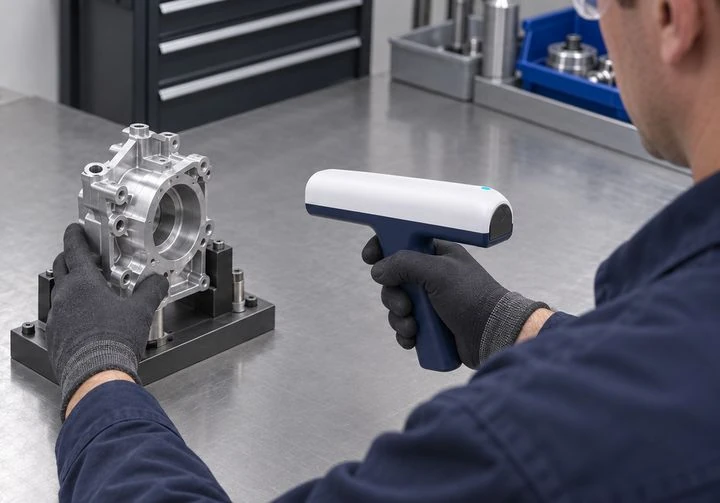
Industrial components can encounter contamination, wear and cleaning throughout their service life. An item-level identifier supports a connection to the registered manufacturing and service record.
Placement and protection should be designed around the component, including how a technician will reach and read it in the field.
Plan the evaluation
The item material and geometry; candidate attachment locations; temperature, chemical and mechanical exposures; duration and cycle count; reader access; and required read performance.
Use the approved specification and test report for the intended configuration. A chip-level range does not by itself qualify the host material, attachment or entire workflow.
Agree the acceptance criteria before the evaluation: identification rate, cycle time, attachment integrity and exception handling, under the intended conditions.
Let’s make it work
Tell us what you need to identify, what it has to withstand, and where the record needs to go.
Discuss your application