In-mold
Embedded during the manufacture of a compatible item.

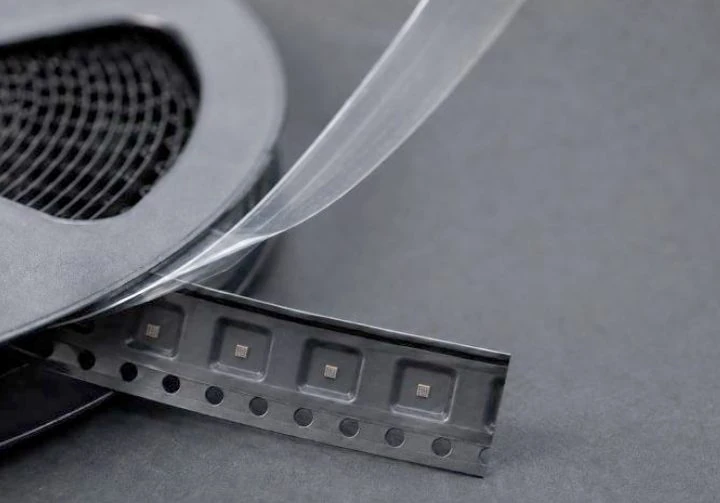
The microtransponder
A complete transponder on a silicon die, with a fixed identifier and no battery on the item.
Discuss your application
Identity at the item
Power, memory, logic and an antenna are integrated into the microtransponder. Light supplies the operating energy; the die returns its identifier to a compatible reader.
Placement can be in-mold, within a label construction, directly on a component or alongside a printed code. The right construction depends on the item and its workflow.
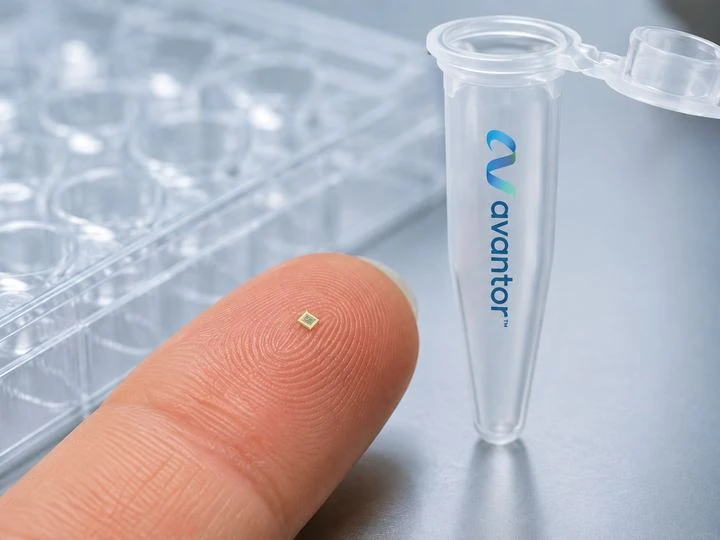
Attachment & integration
Placement is evaluated together with durability and reader access.
The practical details
A fixed ID supports item identification. Registration, attachment, reader controls, event handling and the integration determine the assurance of the complete workflow.
Supported read-through conditions depend on the covering, light transmission, placement and reader configuration. These conditions are part of an application review.
The die, attachment and host material must be considered together. Temperature, chemistry, duration, cycling and post-exposure reading requirements are evaluated for the application.
Let’s make it work
Tell us what you need to identify, what it has to withstand, and where the record needs to go.
Discuss your application