
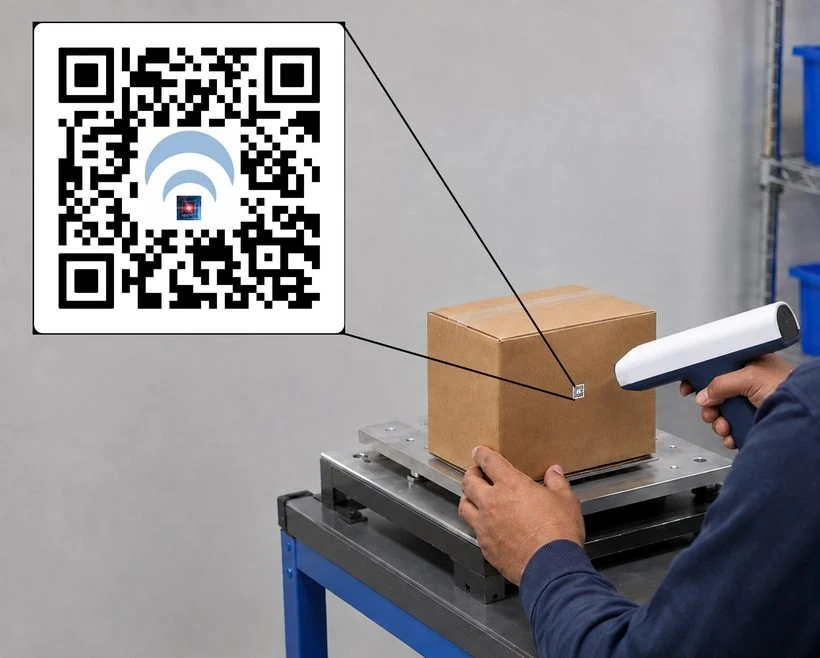
p-Chip Code
Keep your code.
Add a physical check.
Pair an established printed identifier with an item’s microtransponder identity in a compatible reading workflow.
Discuss your applicationComplement the infrastructure
Two identifiers.
One registered relationship.
- 01
Printed code
The QR or DataMatrix symbol carries its existing payload.
- 02
Physical identity
The chip supplies its fixed identifier through a compatible reader.
- 03
Configured match
The system checks that the two identifiers have the expected registered relationship.
At the point of verification
Make a copy
an exception.
Copying a printed code does not also provide its associated microtransponder. A configured check can detect a missing or mismatched physical identity.
A complete solution also considers unreadable chips, substituted items and attachment integrity. The response to each exception is defined before deployment.
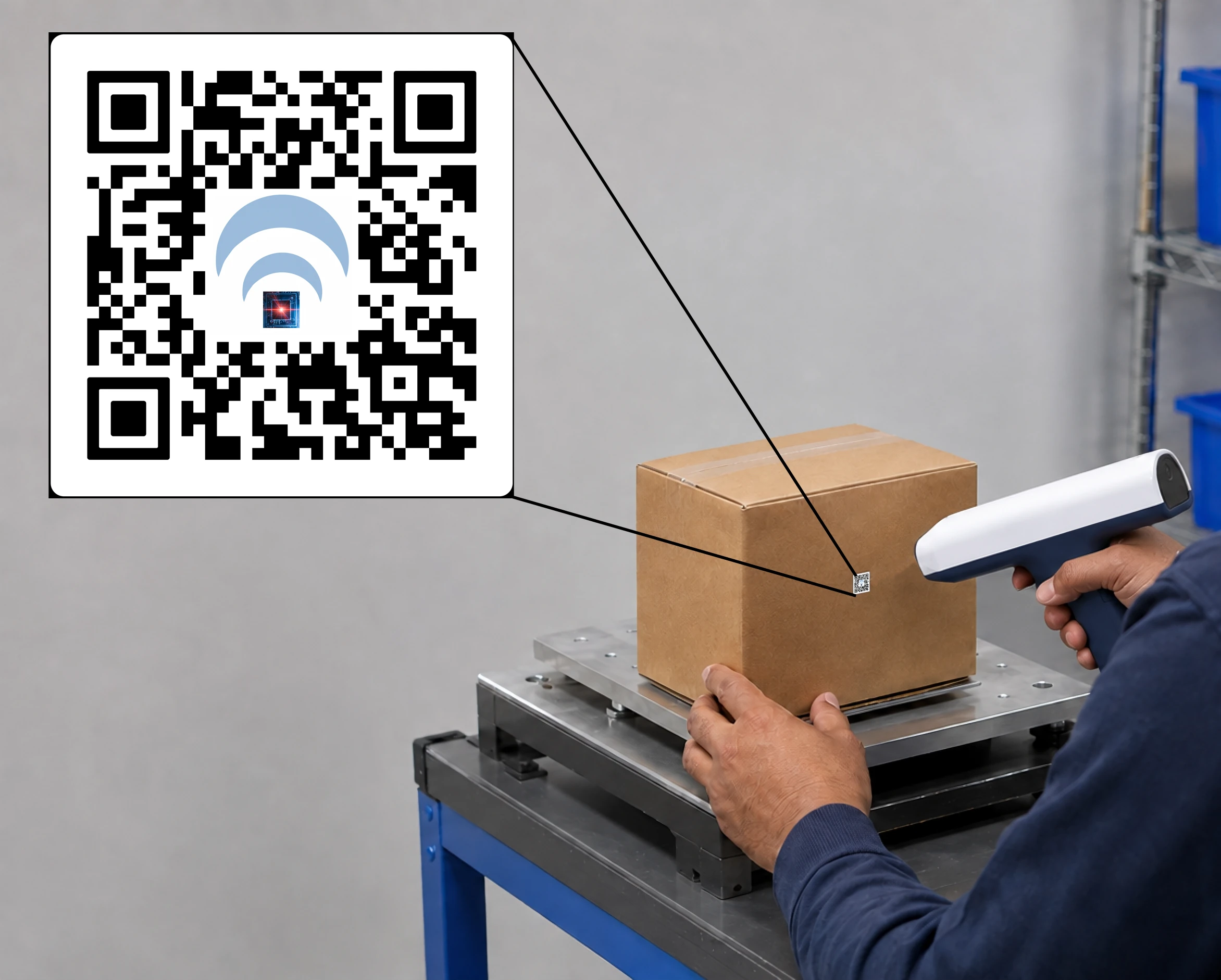
Before deployment
Designed around
the complete label.
Can any existing scanner perform both checks?
No. Code-only scanners continue reading the printed symbol. Combined authentication requires compatible microtransponder reading hardware and an appropriate integration.
Where does the chip sit?
Placement is designed for the label construction and reader. Symbol readability and applicable QR or DataMatrix requirements must be verified for the complete design.
What changes in the workflow?
Registration, reader configuration and exception handling are specified for the application. Evaluation establishes whether the combined read fits the existing process.
Let’s make it work
Start with one
critical checkpoint.
Tell us what you need to identify, what it has to withstand, and where the record needs to go.
Discuss your application